AUSTIN — “Oh my gosh, $10 for a drink.”
That’s the reaction Isabela Salazar, a Dutch Bros Coffee employee, hears every so often at the register.
For six months last year, a 50% tariff affected Brazilian coffee beans entering the United States. Then, in November, the tariff was reduced to 10%. The tariffs were supposed to be temporary, but the price increases they triggered — and the ones that followed for entirely different reasons — appear to be here to stay.
In mid-2025, President Donald Trump imposed sweeping reciprocal import tariffs, including duties as high as 50% on green coffee beans from major exporters like Brazil. By Nov. 2025, after pushback from consumers and distributors, Trump signed another executive order reducing reciprocal tariffs on coffee, maintaining a 10% baseline tariff on coffee.
For an industry that runs on thin margins and long supply chains, months of tariff uncertainty were enough to reshape how coffee moved into the country, even after the policy reversed.
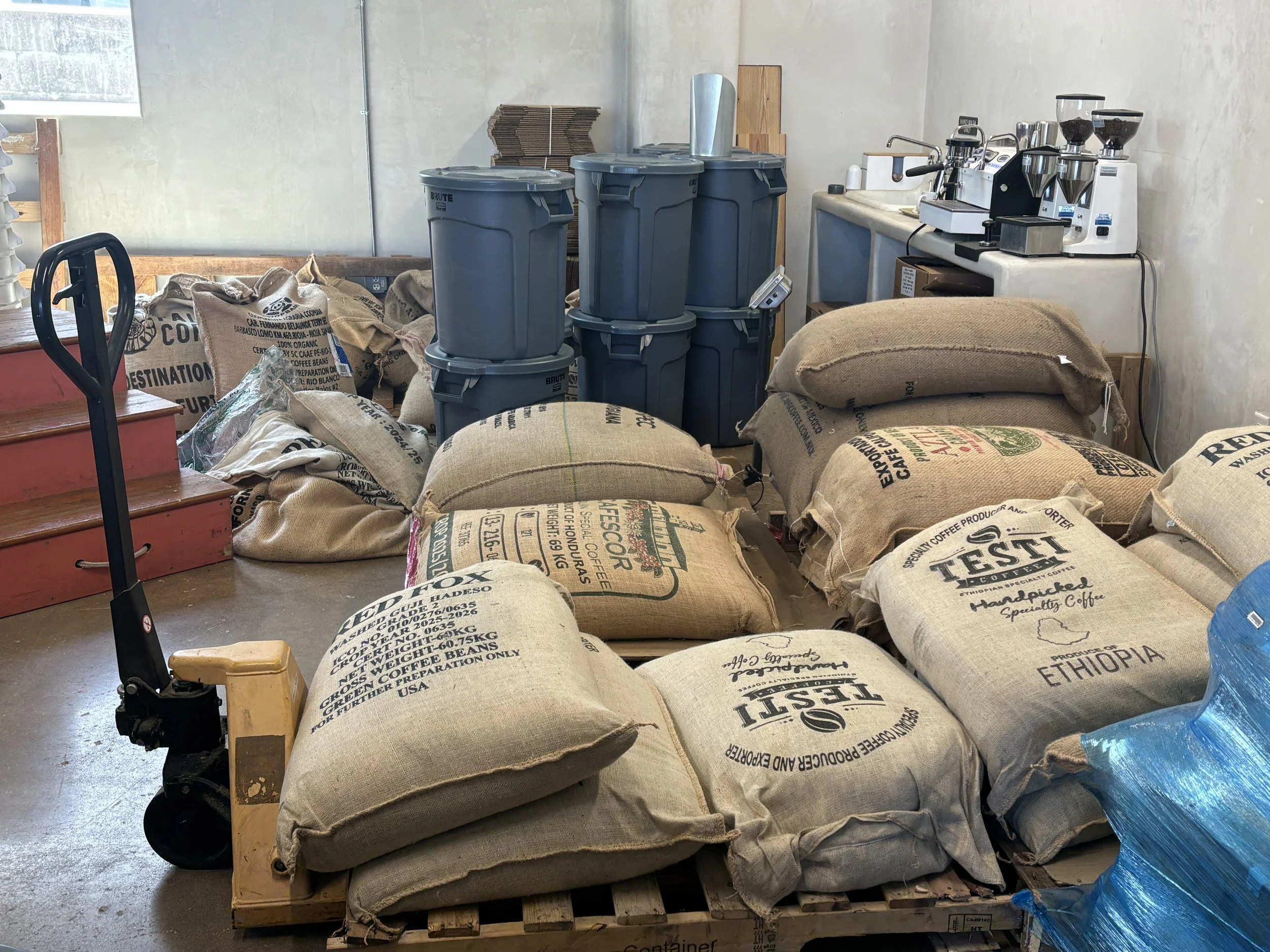
T.J. Roberts, head roaster and coffee bean procurer at Palomino Coffee and Flat Track, said the tariffs collided with an unrelated disruption: instability in the Strait of Hormuz, creating a holding pattern at U.S. ports.
“The tariffs and the issues with the Strait of Hormuz kind of doubled up, so coffee would arrive, but importers would leave it in vessels until (they were ordered),” Roberts said. “Once you pull (the coffee) off the boat, you have to pay the tariffs.”
Roberts said the strategy was to obtain as much pre-tariff coffee as possible before it touched U.S. soil, leaning on relationships with importers. “It worked out pretty good,” Roberts said.
While maneuvering helped delay price increases, it didn’t prevent them forever. Drought in Brazil shrank supply and pushed prices up regardless of tariffs, Roberts said.
“Brazil has a lot to do with the overall market value of coffee because they base the entire coffee market value off of Brazil’s coffee prices, and that affects everyone else in specialty coffee,” Roberts said. “So if the market in Brazil goes up, then everyone else’s coffee (prices go) up.”
From July 2025 to June 2026, Brazil produced around 60 million 60-kilogram bags of coffee beans, according to the USDA. The 2026-27 growing season is forecast to produce more than 70 million bags of coffee — more in line with past Brazilian output expectations. Because Brazil is a top global coffee producer and accounts for nearly 40% of global coffee production, according to the USDA, even a temporary dip ripples through prices worldwide.
Rachel Wellhausen, a UT Professor of Economics who studies international political economy, said prices won’t necessarily fall, even once supply recovers.
“The principle of prices going down is not built into the system,” Wellhausen said. “Why should (consumers) ask for less if (they) are willing to pay what (retailers) are asking for now?”
Wellhausen said that “price relief is kind of like a red herring” — as long as people keep buying coffee at today’s prices, there is no market pressure to push them back down.
Wellhausen also said the tariff itself was unusual: tariff law generally requires a national security rationale, but coffee doesn’t have foreign competition — more than 99% of coffee in the U.S. is imported, according to the National Coffee Association.
“It’s unusual that the administration is so committed to finding a way to put a high tariff on goods,” she said, describing the pattern of “securitization” — labeling non-military issues as national security threats to justify extraordinary emergency measures.
“National security has tried to become this compelling reason for doing this stuff,” Wellhausen said.
At the register, customers are responding to higher prices by making choices about what they can afford to add to their order.
Maggie Arredondo, a barista at Summer Moon Coffee, said customers skip tacos or pastries, or complain about add-ins like milk substitutes that raise the price.
Arredondo said management rarely explains why. The one time they addressed it, she said, was when “prices jumped by like 10 cents, and they just said it was because things were getting more expensive.” The shop has responded by stocking less food, she said.
Reactions vary by shop and by chain. At a Summer Moon Coffee location in Frisco, barista Hope Elliott said management doesn’t identify to employees what is driving cost increases for Summer Moon customers.
“Prices have gone up a couple times over the last two years or so, but they don’t say what ingredient is racking up the price,” Elliott said.
Salazar said the corporate scale of Dutch Bros Coffee seems to soften how customers react to the price, even if it doesn’t alleviate the price shock entirely.
“At Dutch Bros, I feel like because it’s a chain corporation, I would say customers aren’t shocked by the prices,” Salazar said.
For roasters, importers and coffee ships, the tariffs may have been temporary. The supply shortages, higher costs and new prices that tariffs helped set in motion are proving harder to untangle.
For customers ordering at the register, the distinction may not matter much: the tariff is gone, and the higher price of coffee remains.
